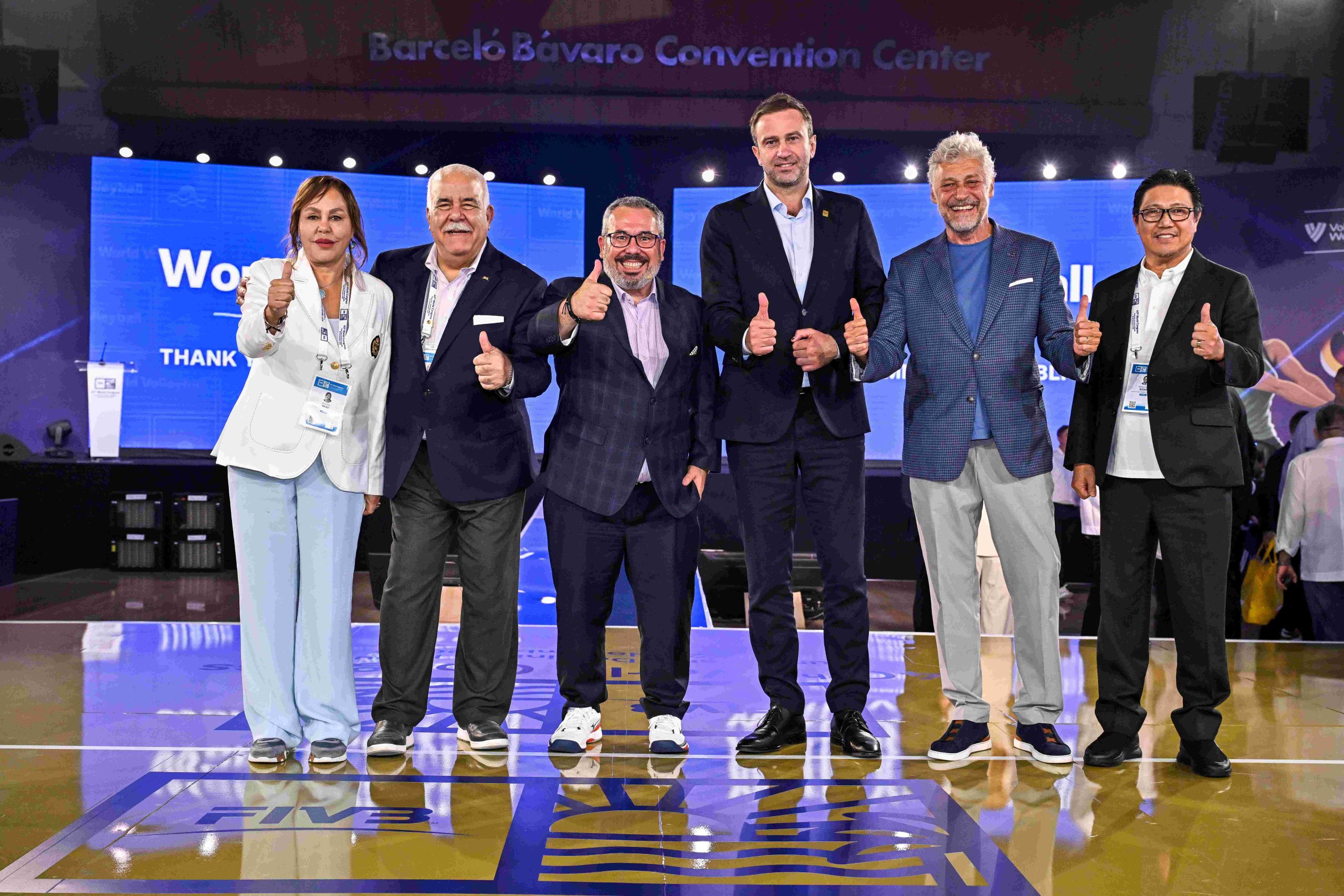
PUNTA CANA, Dominican Republic, November 25, 2026.- In a historic milestone for the Global Volleyball Movement, the FIVB has become the world’s largest International Federation, following the expansion of its global membership to 232 at the 40th FIVB World Congress in Punta Cana, Dominican Republic.
The landmark achievement reflects volleyball’s extraordinary global reach and the continued growth of a sport that connects people, communities and cultures across every continent.
The expansion was among the important decisions taken during the three-day Congress, reinforcing the Global Volleyball Movement’s shared commitment to sustainable growth, stronger governance and the ambitions of the FIVB Strategic Vision 2032.
The day also focused on delivering the FIVB Strategic Vision 2032 through stronger governance, financial transparency and the continued global development of volleyball.
Opening the proceedings, Felipe Vicini, President of the Fundación Creando Sueños Olímpicos (CRESO), highlighted the importance of supporting athletes beyond their sporting careers. With 16 federations and approximately 170 athletes involved, the programme has helped 25 athletes graduate, and every Olympic medal won by the Dominican Republic has been secured by a CRESO-supported athlete.
12. FIVB Good Governance – State of the Art
Governance remains central to the FIVB’s long-term ambitions, with continued improvements in transparency, accountability and financial management.
Delegates reviewed the 2024 and 2025 financial reports, the proposed budgets for 2027 and 2028, and the work of the newly established Investment Committee.
All resolutions were approved by acclamation, including the financial reports, discharge of the Board of Administration for 2024-2025, appointment of PricewaterhouseCoopers (PwC) as external auditors for 2026-2030 and the proposed budgets.
The Congress also showed the significant progress in the ASOIF governance review, which has moved the FIVB into the top A1 ranking. The FIVB improved in all five areas of transparency, integrity, democracy, development and control mechanisms.
A major milestone was the approval of the FIVB Constitution, following a two-year review guided by the Olympic Charter and Strategic Vision 2032. The new framework sets mandatory and highly recommended governance standards for National Federations, with implementation required by 2030.
13. National Federations’ Categorisation and Membership
Growth, development and membership
The focus turned to the continued expansion of volleyball and the ambition to become the biggest International Federation in the world.
The progress to date of the new National Federation Categorisation model was discussed. It helps the FIVB understand each federation’s strengths and needs, so tailored support can be given. Almost 200 of the 222 federations completed the self-assessment so far, which looks at governance, sporting performance, and the hosting of FIVB competitions.
The Congress approved 15 new Associate Members, bringing total membership to 232, comprising 217 National Federations and 15 Associate Members. This makes the FIVB the largest International Federation in the world.
The new members are Bonaire, Curaçao, St. Eustatius, Sint Maarten (Dutch), Saba, French Polynesia, French Guyana, Guadeloupe, Martinique, New Caledonia, Turks & Caicos, Tokelau, Wallis & Futuna, Réunion and Mayotte.
14. International Relations and the Olympic Movement
Building partnerships and strengthening cooperation
International relations has become an integral part of the FIVB Strategic Vision 2032, reflecting the importance of stronger partnerships across the Olympic Movement.
Pierre Ducrey of the International Olympic Committee (IOC) presented Fit for the Future, highlighting the importance of putting athletes at the centre and working collectively to create greater opportunities through sport.
For volleyball, this means making the sport more accessible, understandable and affordable, so that more communities can experience its benefits.
Delegates also received updates on preparations for the LA28 Olympic Games, including venues and qualification pathways. Collaboration with the IOC will continue as preparations develop for Brisbane 2032.
15. Social Responsibility and Mass Participation
Power of volleyball to change lives and bring communities together
The Congress reached the fifteenth and final point of the Strategic Vision, starting with the FIVB Volleyball Foundation with an inspirational presentation from its President, HRH Princess Ayah bint Faisal, and Executive Director Victoria Nussbaumer. Through the Volleyball Foundation, five projects across five countries involve 14,000 participants and 400 volunteers.
The Mass Participation & Snow Volleyball Commission told the Congress that an estimated 250 million people play some form of volleyball worldwide, across 57 different versions of the game. Initiatives including the Volleyball Atlas, Volleyball Experience, VNL Legacy Courts, school programmes and close work with World ParaVolley are helping make the sport more accessible and inclusive.
Air Volleyball was introduced by Yuan Lei, an FIVB Board of Administration Member and Vice President and Secretary General of the China Volleyball Association. Featuring a lighter, softer ball, lower net and smaller court, it is another example of innovation helping remove barriers and bring the game to new generations.
Volley Talks – Innovation and the future of sport
Three Volley Talks brought fresh perspectives on the future of sport and volleyball.
Volleyball World Chair Michael Payne explored how sport is becoming increasingly connected to business, technology and global entertainment. From artificial intelligence to digital broadcasting and hybrid stadium experiences, he considered how the next 50 years could transform sport, while stressing the importance of protecting its values and human experience.
World ParaVolley President Juergen Schrapp and Vice President Elvira Stinissen highlighted how ParaVolley, now active in 70 countries, builds inclusion, confidence and belonging for athletes with physical disabilities through sitting volleyball and standing beach volleyball. Following an MoU with the FIVB, the organisation is signing further agreements with continental and zonal associations and aims to reach more than 100 members by 2028.
Hidekazu Iizuka, President and CEO of Mikasa, and Yukina Moriyama celebrated the 60-year partnership between the FIVB and Mikasa. Mikasa also unveiled a new Air Volleyball ball during the Congress.
Looking ahead
During the Congress, FIVB President Fabio Azevedo and CAVB President Bouchra Hajij also signed a landmark Memorandum of Cooperation, reinforcing their shared commitment to unlocking the full potential of volleyball across Africa.
As the Congress closed, three days of innovative discussions and important decisions provided renewed direction for the Global Volleyball Movement. The FIVB now looks forward to turning its ambitions into action and creating opportunities for millions more people to experience volleyball.
United by a shared vision, working Together as One.